
Sourcing from Vietnam
Sourcing from Vietnam is on most buyers’ shortlist, but a strong headline market does not prove that your category has enough capable suppliers. We test supplier depth, where inputs come from and what the delivered cost really is, so you can decide on evidence rather than momentum.

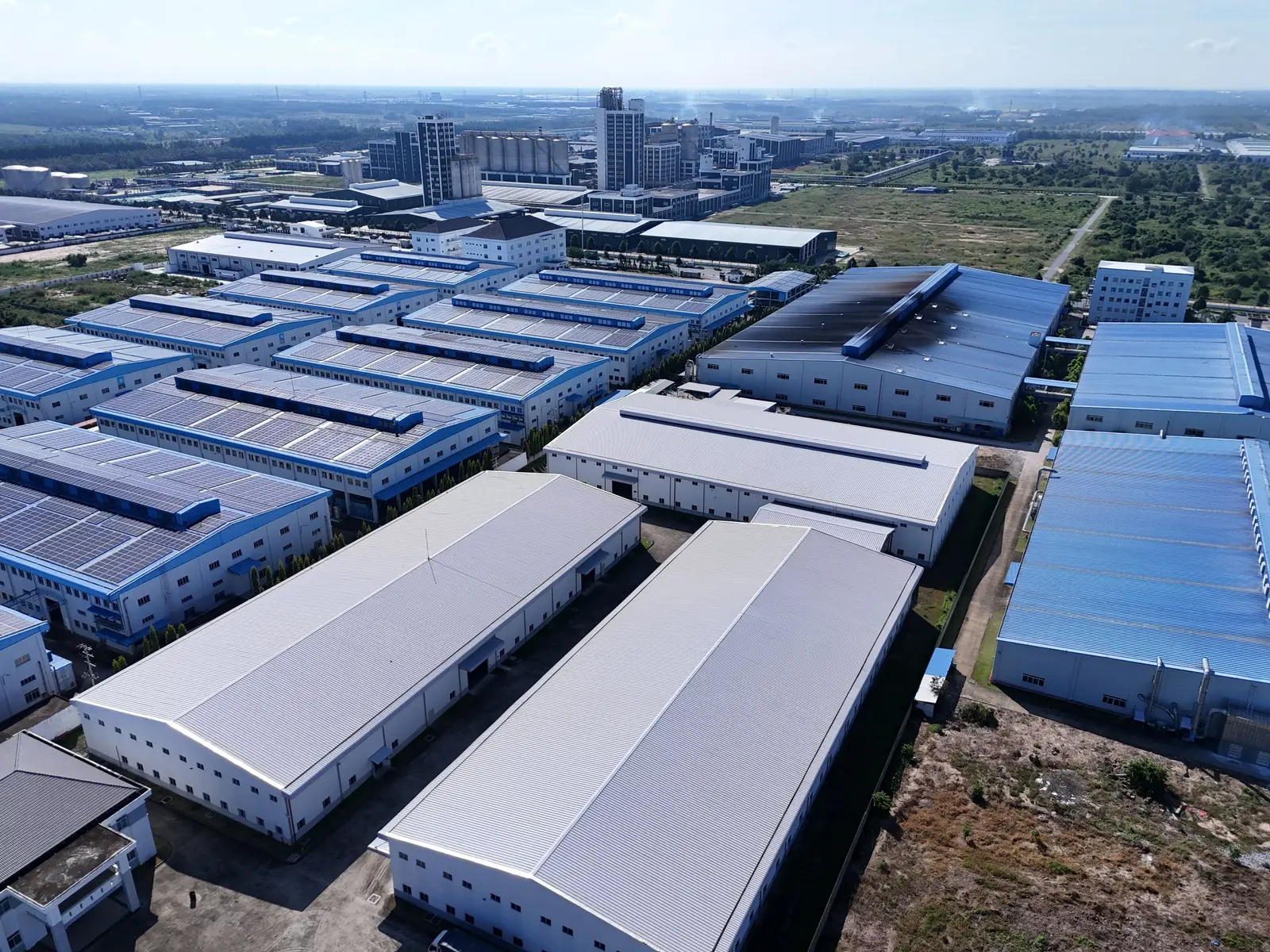
What Buyers Are Up Against
Uneven Supplier Depth
Some categories have many capable suppliers; others have a handful already committed to large buyers.
Imported Inputs
Where materials or components are imported, cost, lead time and origin can depend on another country.
Unit Price vs Delivered Cost
A lower quote can disappear once freight, duty, MOQ and payment timing are added.
Capacity and Priority
Smaller buyers need to know they will get capacity and attention when larger orders arrive.
The Quote Is Only Part of the Decision.
The cheapest quote from Vietnam can still cost more once freight, duty, minimum orders, payment terms and quality are added. We put every offer on the same basis before you decide.
Quote A Lower unit price
Quote B Higher unit price
- Unit price
- Freight and duty
- MOQ and stock
- Payment terms
- Quality and switching
How We Take the Risk Out
Six steps, the same on every engagement. You see the evidence at each one.
- 1
Requirement
We pin down what you actually need: specification, volume, destination, timing and budget.
- 2
Search or Benchmark
We find credible suppliers or test your current supplier against the market.
- 3
Screen
Suppliers that cannot evidence capability, compliance or capacity are removed early.
- 4
Compare
Offers are put on the same basis: unit price, freight, duty, MOQ, payment terms and lead time.
- 5
De-Risk
Qualification, switching and continuity risks are made visible before you commit money.
- 6
Recommendation
You get a written position: proceed, negotiate, second-source, re-source or stay.
Three Ways to Start
Sourcing Feasibility Brief
- You send
- Product, target cost, volume
- You get
- Import versus local on one delivered basis, and which market to test first
Scope agreed firstQuoted After Scoping
Test an ImportSupplier Search and Qualification
- You send
- Specification and criteria
- You get
- 3 to 5 screened suppliers, the evidence behind each and the open checks
Scope agreed firstQuoted After Scoping
Find a SupplierQuote Review
- You send
- 2 to 5 quotes
- You get
- All quotes on one delivered basis, the commitment behind each price, a recommended position
Scope agreed firstFrom US$1,450
Send the QuotesAll prices in US dollars ($), excluding GST or VAT. Not sure which fits? Start with a Free Quote Breakdown.
Before You Start
Can You Help if We Already Buy from Vietnam?
Yes. We can test your current supplier’s price and terms against credible alternatives, so you can renegotiate, add a second source or stay with evidence behind the decision.
Do You Take Commissions from Suppliers in Vietnam?
No. We are paid only by the buyer and take no supplier commissions, so our recommendation is not tied to which supplier you choose.
What Does It Cost?
A Price Deep Dive starts from US$195, a Price Increase Response from US$1,150 and a Quote Review from US$1,450. Scope, fee and timing are confirmed in writing before any work starts. Prices are in US dollars, excluding GST or VAT.
What Do You Need from Us to Start?
The quote, price notice or supplier details, the specification or drawings, your volumes, destination and timing, and a short note on what concerns you. We tell you if anything else is needed before work starts.
Will You Tell Us to Switch Supplier?
Only if the evidence supports it. Staying, renegotiating or adding a second source is often the better answer, and the written position explains why.
Vietnam: What the Evidence Says
Figures come from the public sources named in the text, with their dates.
Vietnam has become one of Asia's most closely watched manufacturing and export markets.
That makes it attractive, and easy to over-generalise.
Strong export growth, substantial manufacturing investment and a growing industrial base show that Vietnam matters. They do not prove that the buyer's exact supplier market is deep enough, sufficiently independent from imported inputs, or commercially stronger than the alternatives.
Merillgrove evaluates Vietnam around the requirement.
Market evidence tells us where to look. Supplier evidence tells us whether to proceed.
CURRENT INDUSTRIAL EVIDENCE
Vietnam's National Statistics Office reported that the country's Index of Industrial Production increased 9.2% in 2025, with manufacturing up 10.5%. Goods exports reached approximately US$475.04 billion, up 17.0%, with manufactured products accounting for 88.7% of export turnover.
The same official data also shows a structural point buyers should not ignore: the foreign-invested sector accounted for 77.3% of 2025 goods exports. Processing and manufacturing has also historically attracted the largest share of Vietnam's registered FDI.
That supports a serious manufacturing thesis.
It also raises useful sourcing questions:
- Is the target category concentrated among foreign-invested manufacturers?
- Are those plants open to the buyer's volume?
- How much local supplier depth exists below the large exporters?
- Which inputs are imported?
- Does the buyer need direct manufacturer access or an export intermediary?
Read the Full Evidence (12 More Sections)
WHY VIETNAM CAN BE ATTRACTIVE
Vietnam can offer a credible route where the category aligns with established industrial clusters, export manufacturing and ongoing investment.
The market has meaningful evidence in areas including:
- electronics and components;
- machinery/equipment;
- textiles and footwear;
- furniture and wood products;
- selected electrical equipment;
- growing high-value manufacturing.
These are broad sector signals. A live sourcing decision still needs category-specific supplier research.
CHINA+1, USEFUL STRATEGY, WEAK SHORTCUT
Vietnam is frequently discussed as a China+1 market.
That can be useful if the buyer's objective is diversification.
But the phrase can hide three different realities:
- a genuinely independent local supply chain;
- final assembly moved to Vietnam while inputs still come from China;
- a multinational production network spanning both countries.
The buyer needs to know which structure applies to the category.
A new factory address does not automatically mean a new upstream risk profile.
INDUSTRIAL CLUSTERS
Vietnam's relevant manufacturing activity is concentrated in different regions.
A serious sourcing search should determine which cluster is relevant to the category rather than searching the country as one market.
Potential areas of investigation include northern industrial zones around Hanoi, Bac Ninh, Hai Phong and neighbouring provinces, and southern manufacturing areas around Ho Chi Minh City and surrounding industrial provinces.
Specific category claims should be supported with current evidence before publication.
SUPPLIER DEPTH
A country's export growth can be strong while a buyer's supplier universe remains narrow.
Merillgrove therefore separates:
- market activity;
- discovered suppliers;
- apparent manufacturers;
- evidence-supported suppliers;
- qualification candidates.
The buyer should know whether Vietnam provides:
- five credible suppliers;
- fifty credible suppliers;
- one multinational plant;
- or a broad base of local manufacturers.
Those are commercially different markets.
FDI AND ACCESSIBILITY
Foreign investment has contributed substantially to Vietnam's manufacturing growth.
That is positive evidence of industrial capability.
But it does not guarantee that every invested facility is accessible to a mid-market buyer.
Some facilities may be:
- captive;
- dedicated to major OEMs;
- operating at large MOQ;
- integrated into closed supply chains.
Supplier-market research therefore needs to distinguish industrial presence from commercial accessibility.
COST
Vietnam's cost case should not be reduced to lower wages.
The buyer needs to test:
- productivity;
- local versus imported materials;
- tooling;
- supplier competition;
- freight;
- tariff/origin;
- inventory;
- qualification cost;
- payment;
- MOQ.
Where Vietnam depends on imported inputs for a category, lower local processing cost may not translate into the expected landed-cost advantage.
QUALITY AND COMPLIANCE
Vietnam contains sophisticated exporters as well as suppliers that require deeper capability verification.
Qualification should consider:
- legal entity and site;
- process;
- certification;
- test evidence;
- capacity;
- customer/export experience;
- subcontracting;
- destination requirements.
The country page should never imply that “export experience” proves buyer-specific compliance.
LOGISTICS
Vietnam has multiple major export gateways, but route viability depends on the manufacturing cluster and destination.
The sourcing decision should examine:
- inland route;
- port;
- sailing frequency;
- consolidation;
- lead time;
- peak-season pressure.
A market can be attractive at the factory and weaker at the buyer's receiving point.
WORKED BUYER EXAMPLE
A buyer wants to reduce China concentration for an electrical assembly.
Vietnam shows:
- strong manufacturing/export evidence;
- several relevant suppliers;
- reasonable commercial quotes;
- imported component dependence.
The correct decision may be:
Proceed with a bounded supplier-qualification sprint, but map the origin of critical components before treating Vietnam as a fully independent second source.
That turns “China+1” into an actual procurement decision.
HOW MERILLGROVE CAN SUPPORT
- Vietnam market-fit review;
- supplier search;
- supplier qualification;
- China-versus-Vietnam comparison;
- RFQ and quote normalisation;
- second-source development;
- Asia Sourcing support.
FAQ
Is Vietnam a good alternative to China?
It can be, but the answer depends on the category, supplier depth, upstream inputs, economics and buyer objective.
Is Vietnam manufacturing growing?
Official 2025 statistics show strong industrial and manufacturing growth and significant export activity.
Are Vietnam suppliers cheaper?
Not universally. Commercial economics depend on the exact supplier, quantity, inputs, freight and terms.
Does Vietnam have direct manufacturers?
Yes across many sectors, but the live supplier universe should be verified by category.
Can Vietnam reduce China dependency?
Sometimes. The buyer should check whether critical upstream inputs remain sourced from China.
Source register
National Statistics Office of Vietnam, Socio-economic situation in the fourth quarter and 2025, Jan 2026.
https://www.nso.gov.vn/en/data-and-statistics/2026/01/socio-economic-situation-in-the-fourth-quarter-and-2025/Vietnam Ministry of Industry and Trade, Regular press conference Q2 2025, processed/manufactured export evidence.
https://moit.gov.vn/tin-tuc/bo-cong-thuong-hop-bao-thuong-ky-quy-ii-2025.htmlMinistry of Planning and Investment, FDI attraction situation in Vietnam and Vietnam's overseas investment in January 2025, manufacturing/processing FDI evidence.
https://www.mpi.gov.vn/en/Pages/2025-2-11/FDI-attraction-situation-in-Vietnam-and-Vietnam-s-emu1z8.aspx
Evidence note: These sources establish macro/sector context. Category, supplier, cost and compliance claims require current requirement-specific validation.
Related Guides
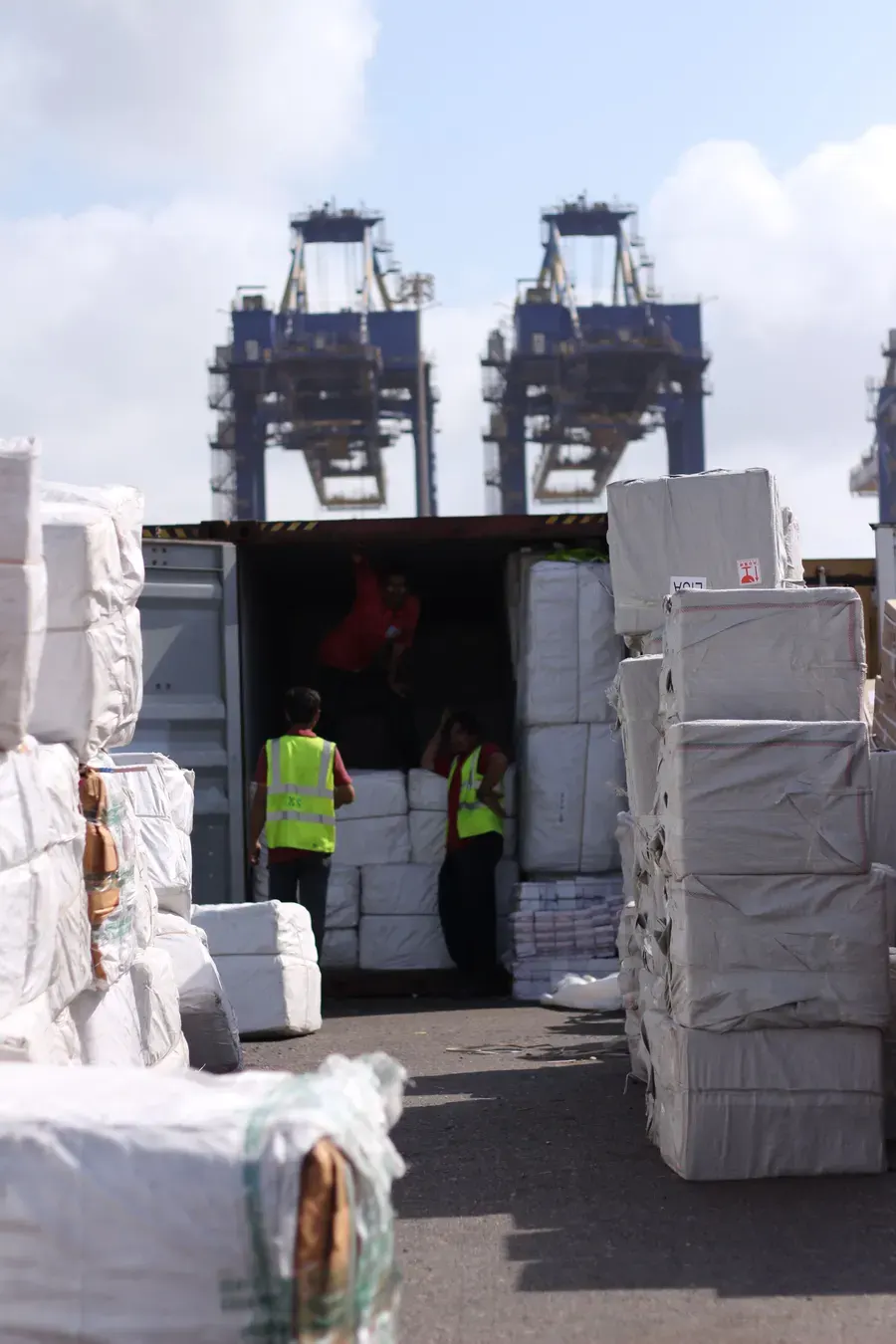 Asia SourcingSourcing From Vietnam vs China: Compare the Landed CostSourcing from Vietnam vs China, compared as landed cost per unit: price, freight, duty scenarios, deposit, defects and MOQ, with the break-even duty gap.Read the Guide
 Asia SourcingChina Plus One: Is Moving a Product Out of China Worth It?A China plus one test for importers: switching cost against duty and cost saving, a landed-cost break-even, three duty scenarios and a decision ladder.Read the Guide
 Trade TriggersIEEPA Tariff Refunds: What Importers Should CheckIEEPA tariff refunds go to the importer of record. What to check in ACE, what to ask vendors who charged you a tariff surcharge, and a worked example.Read the Guide
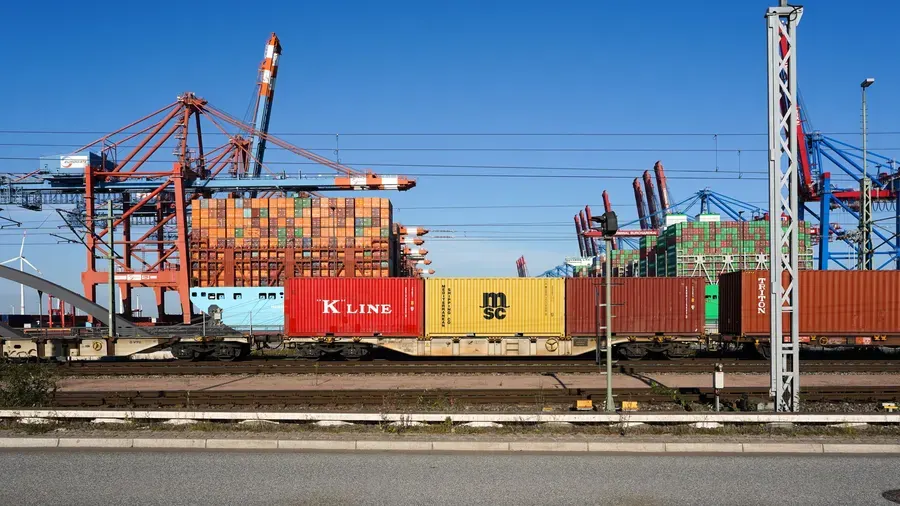 Trade TriggersEU Steel Safeguard Changes in 2026: What Steel Buyers Should CheckThe EU's new steel regime: quotas from 1 July 2026, a 50% out-of-quota duty and melt and pour evidence from 1 October. How to test a steel surcharge.Read the Guide
 Trade TriggersAnti-Dumping Duties in Australia: Check Your Supplier ListAustralian dumping duty is set by goods, country and exporter. A six-step exposure check for your supplier list, a landed cost example and dates to watch.Read the Guide
- Trade TriggersCBAM Surcharges on Supplier Invoices: What to Ask Before You PayA CBAM surcharge should equal net embedded emissions times the certificate price for the quarter of import. The data to ask for, a worked test, and dates.Read the Guide
Send the Quote.
Tell us what you are buying and what is worrying you. We reply with what we would check first and what it would cost.